The Resilient Campus
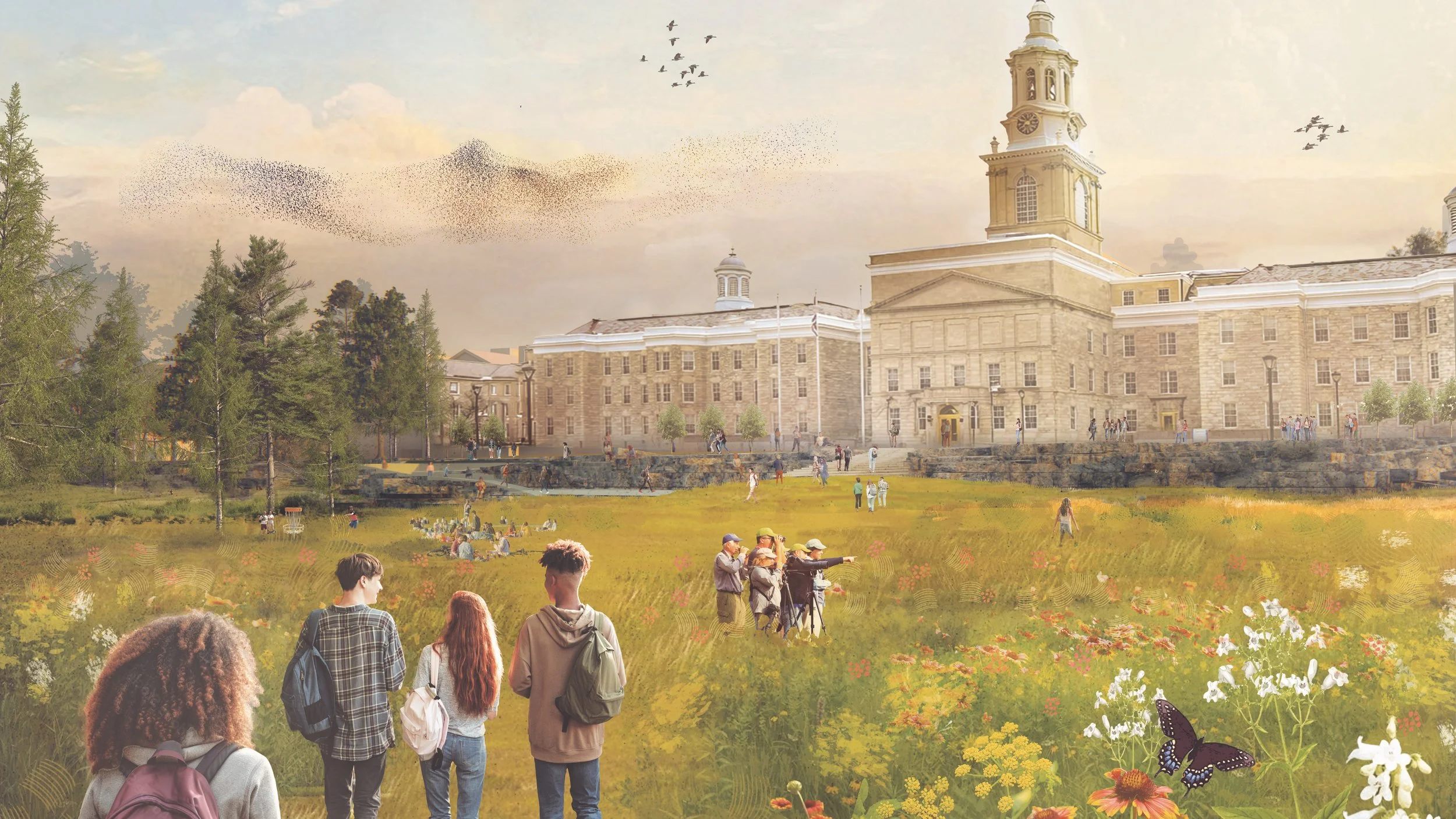
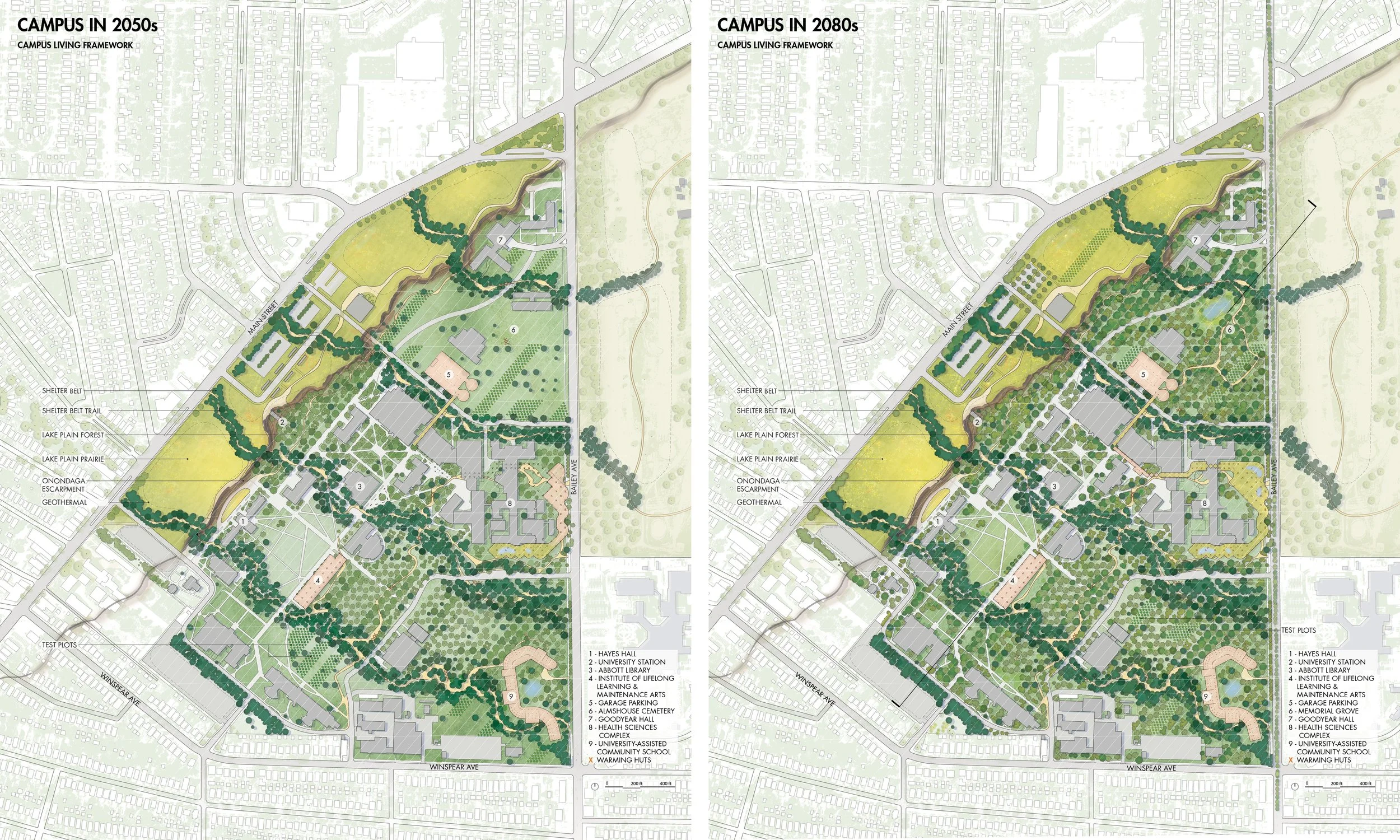
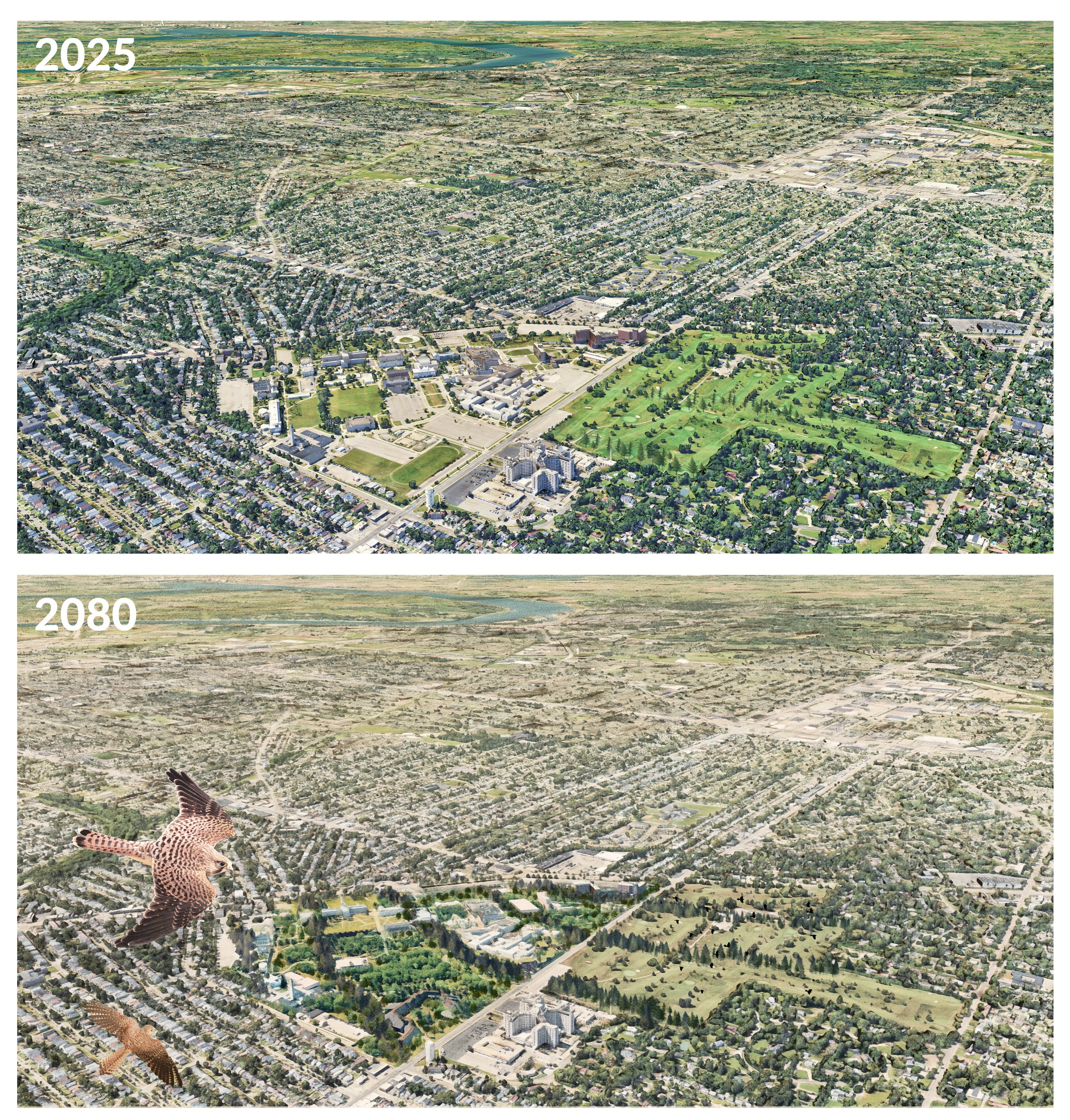
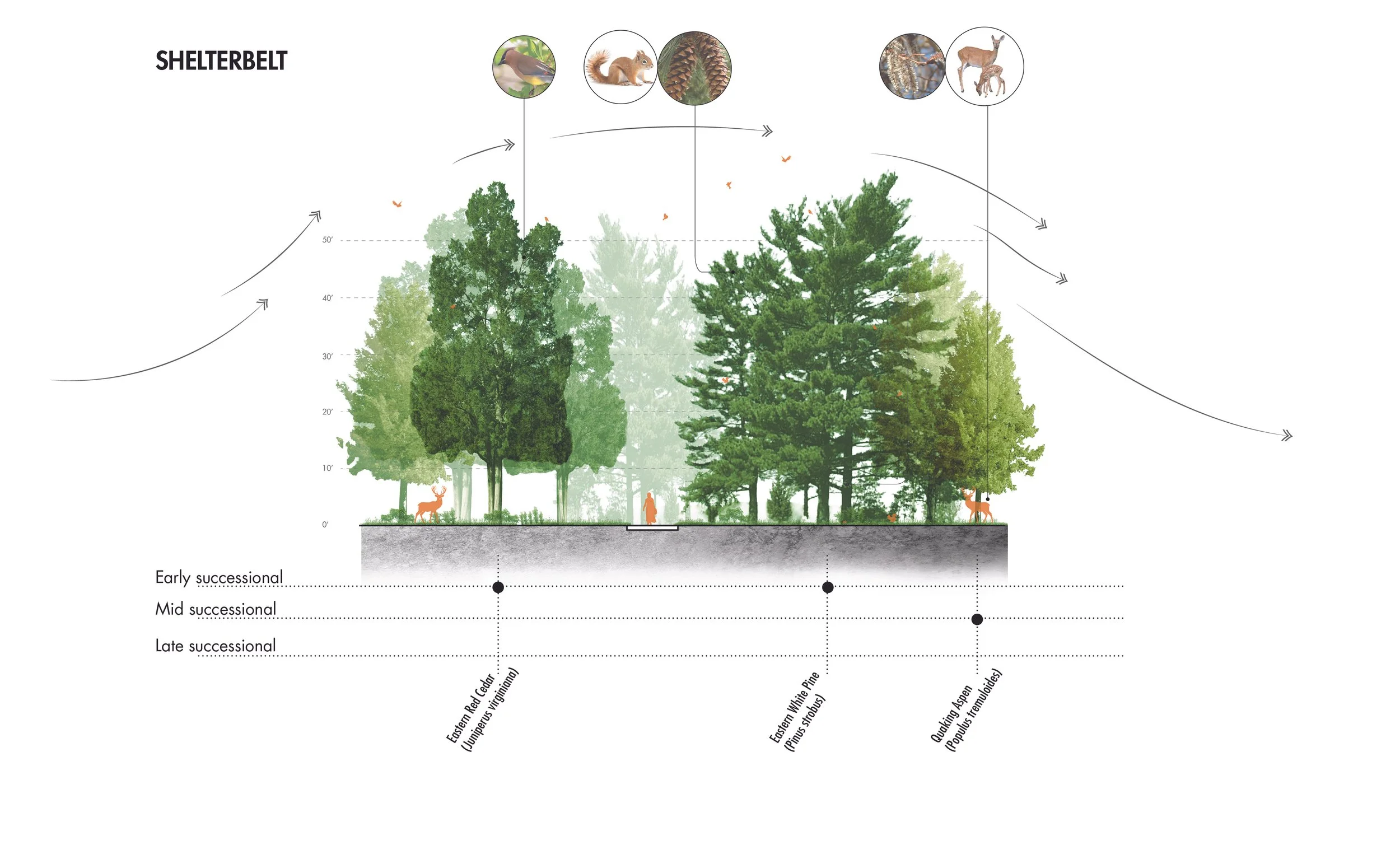
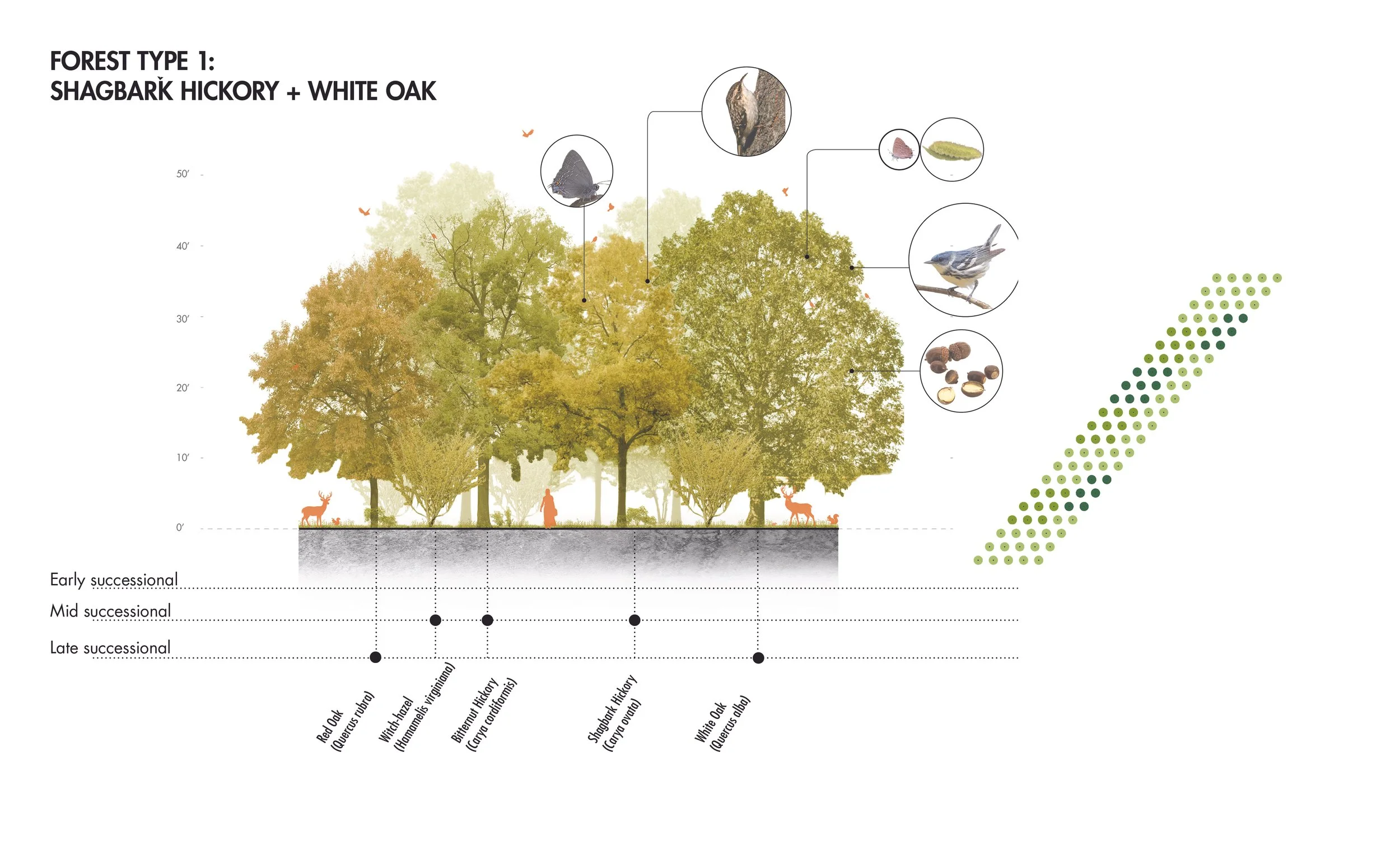
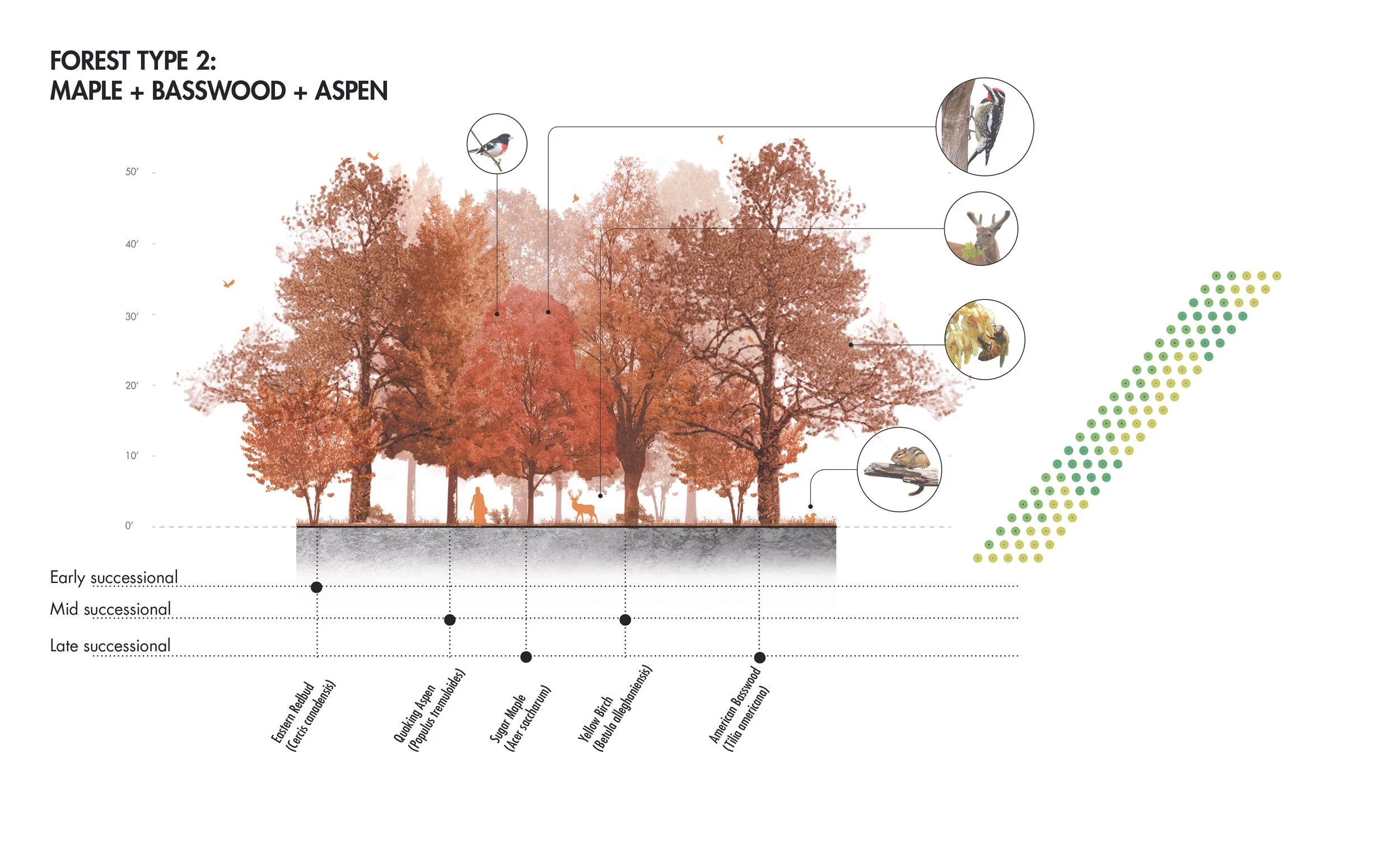
One of three winning proposals in The Resilient Campus Competition hosted by the University at Buffalo School of Architecture & Planning, our design began with a simple conviction: ecology is not one layer of the proposal, it is the lens through which everything else comes into focus. At its core, this project sees the South Campus as an important site for reparative actions in Buffalo, both social and ecological and afforestation as the method for repair. Forest ecologies remind us that coexistence, difference, and inherent generosity are actually the basis of community health.
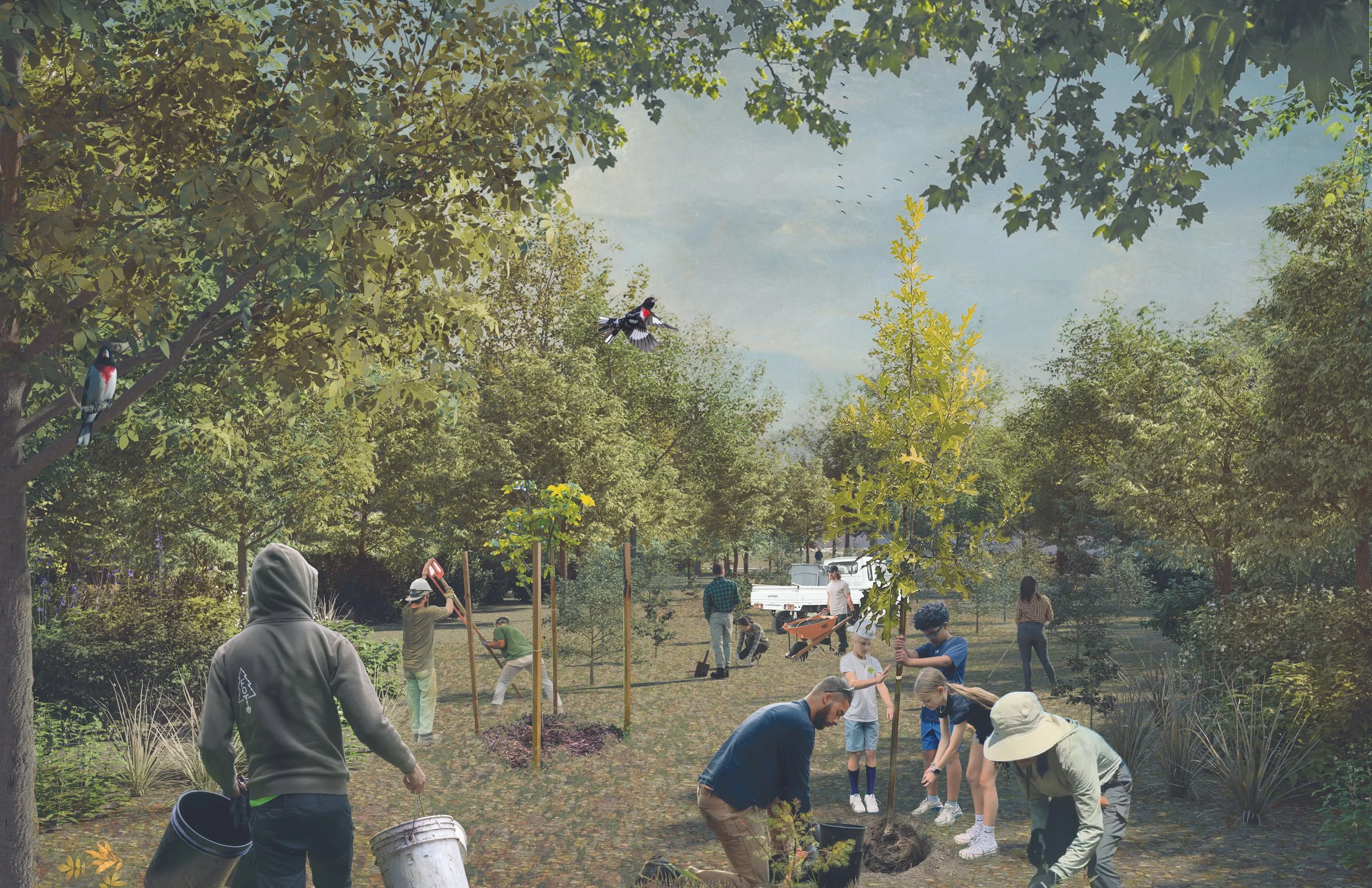
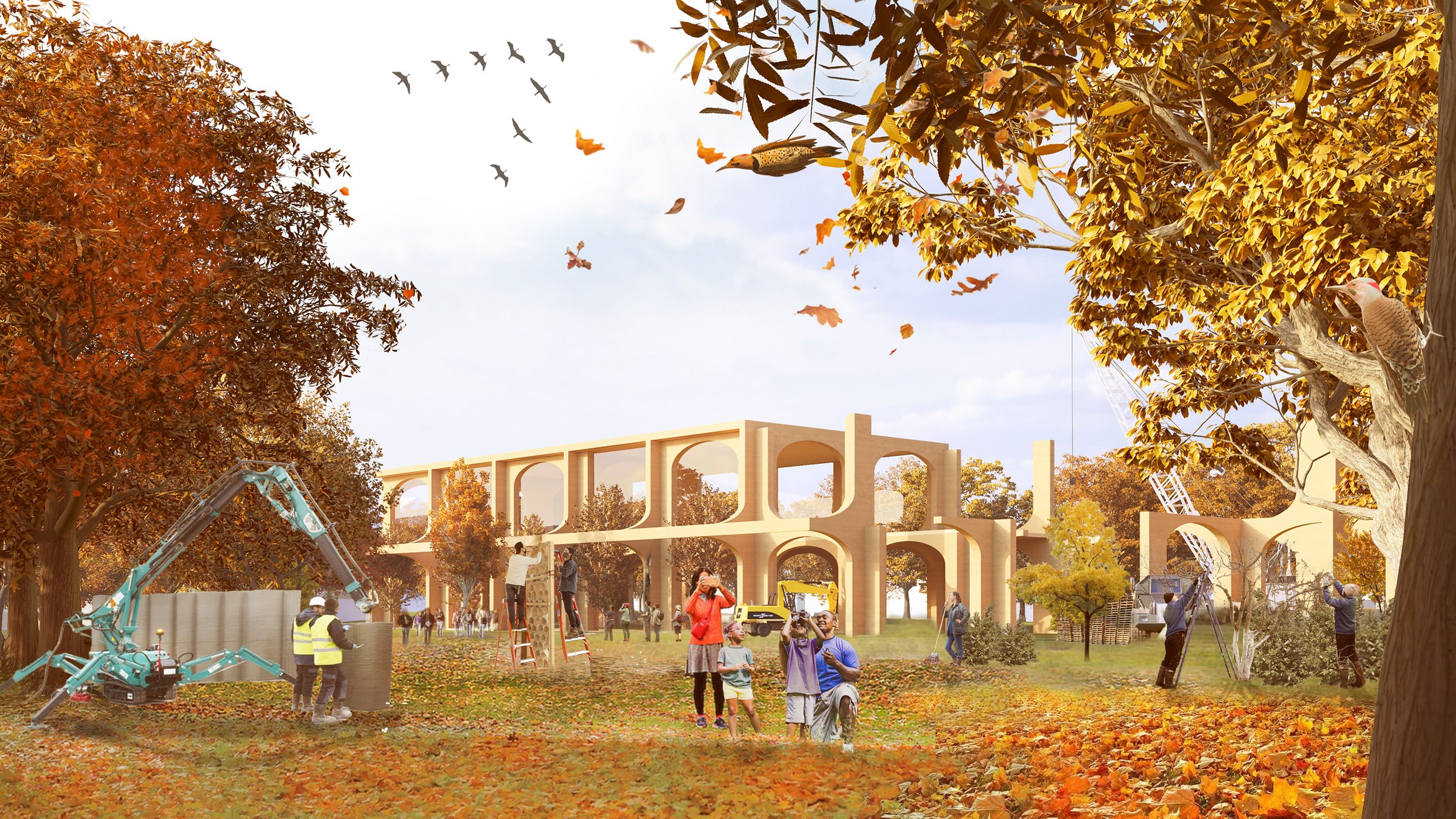
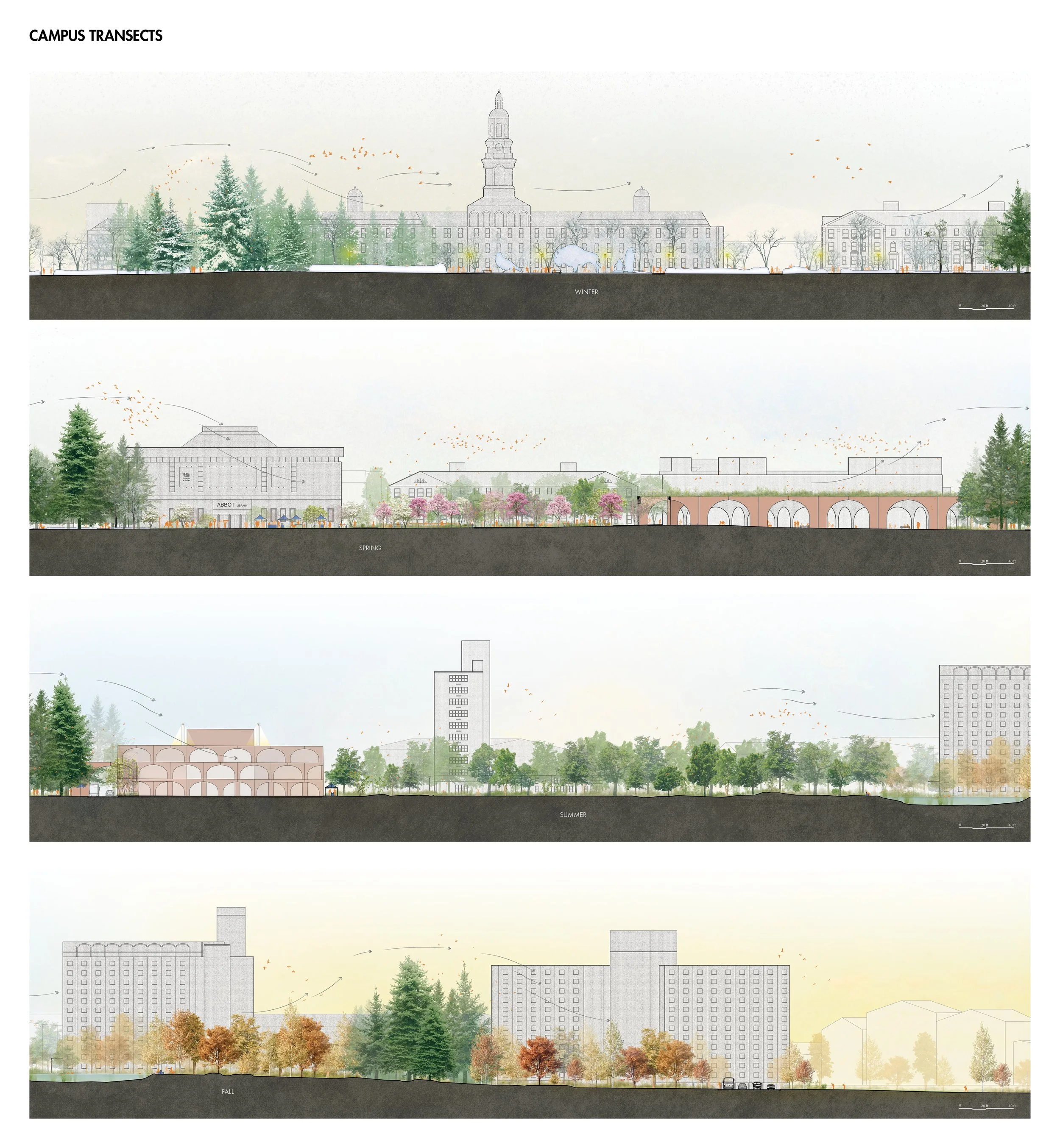
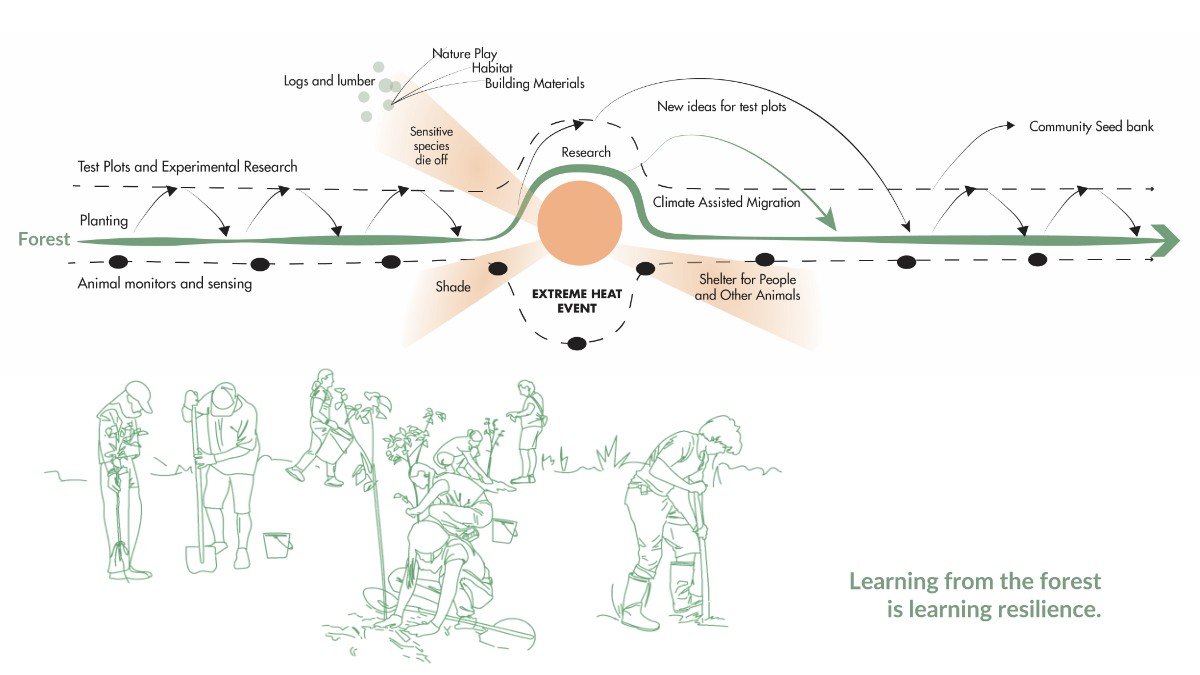
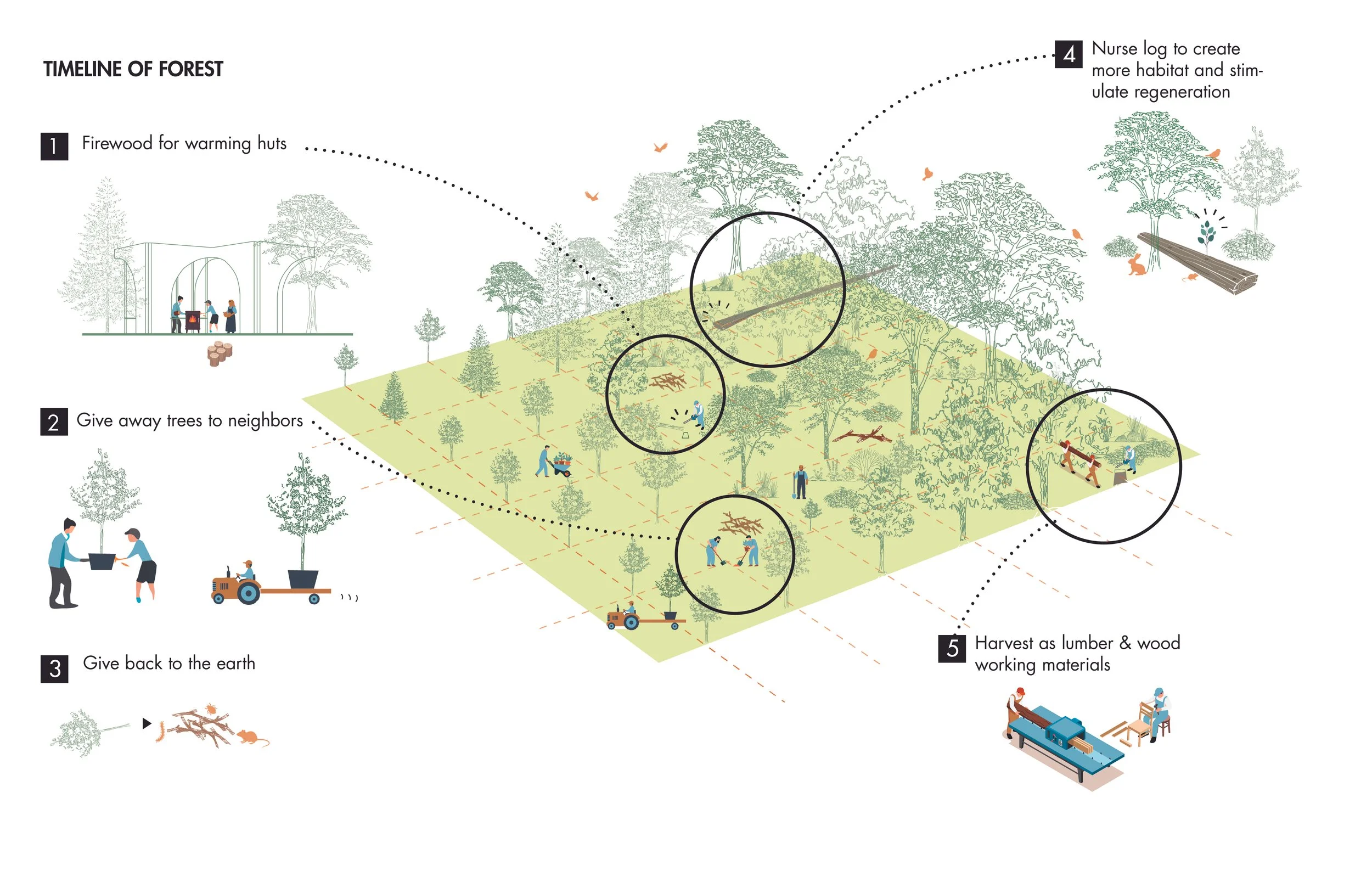
By restoring continuous, biodiverse forest systems, the campus itself becomes a teaching method: a place where people plant, tend, build, repair, and learn together over time—using regenerative materials and reused structures as part of a long ecological story.
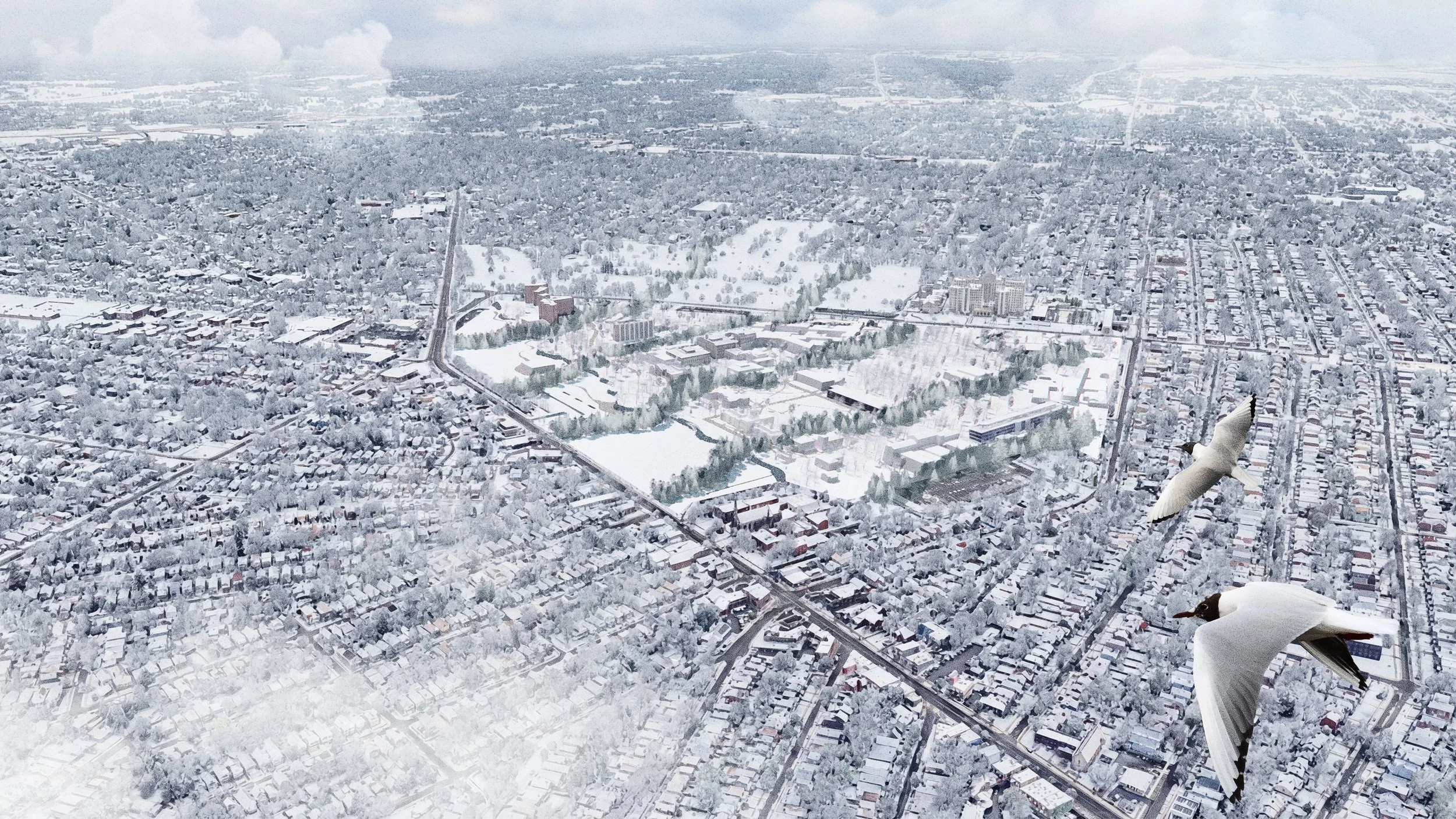
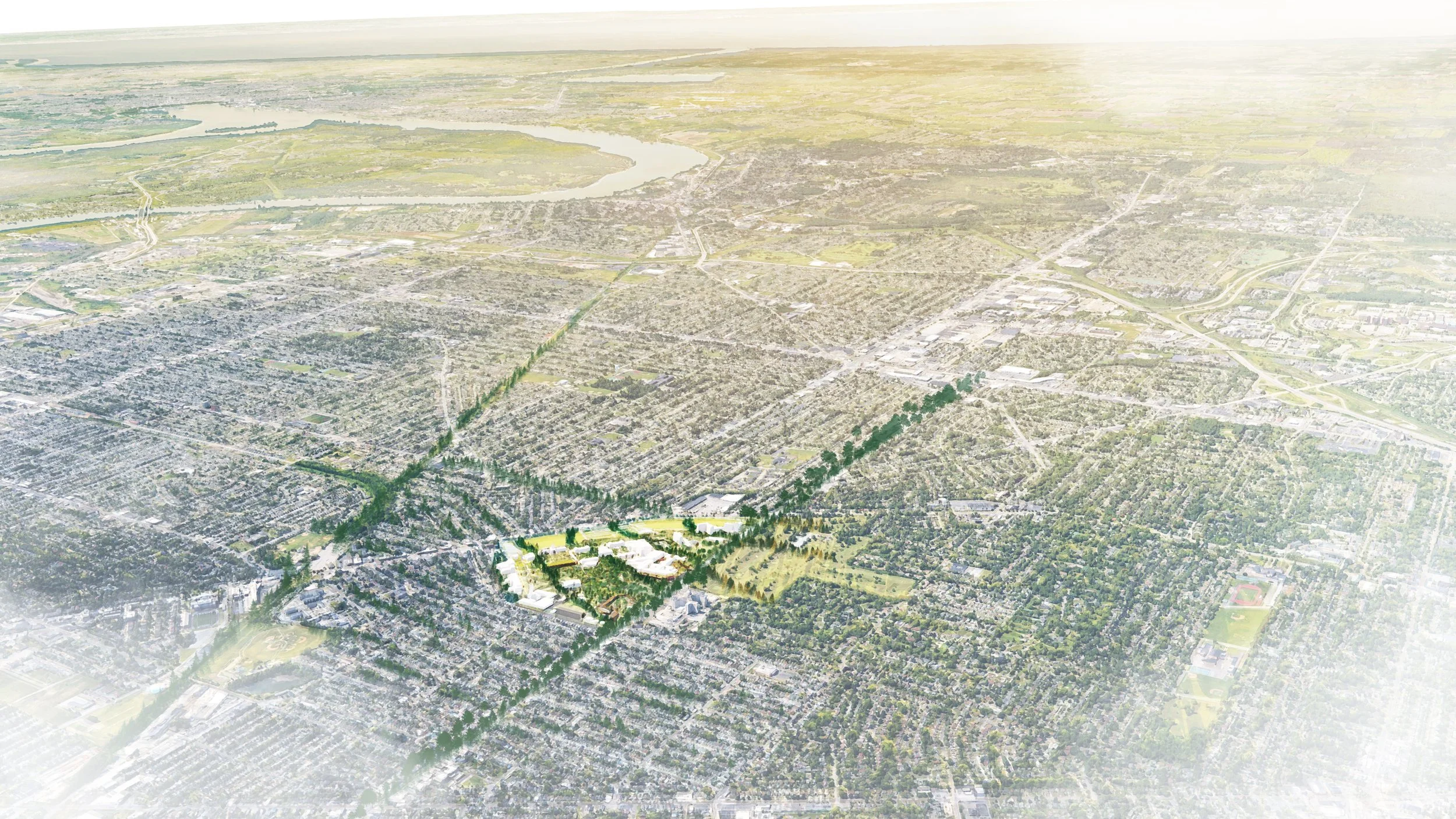
In this vision, the campus is not an endpoint, but a source—a living system that propagates knowledge, feeds imagination, supports ecology, and elevates care throughout the university, into the city, and across the region.
Location: Buffalo, NY
Client: University of New York at Buffalo
Project Size: 153 acres
Status: Competition Completed 2026
Role: Landscape Architecture, Master Planning
Collaborators: MASS, SITELAB Urban Studio, Second Nature Ecology + Design
UB Collaborators: Joyce Hwang, Hiro Hata, Will Sundell, Ryan Mellen, and Ashley Johnson
Awards + Recognition:
One of three Winning Proposals in the Resilient Campus Competition
Forest as Foundation
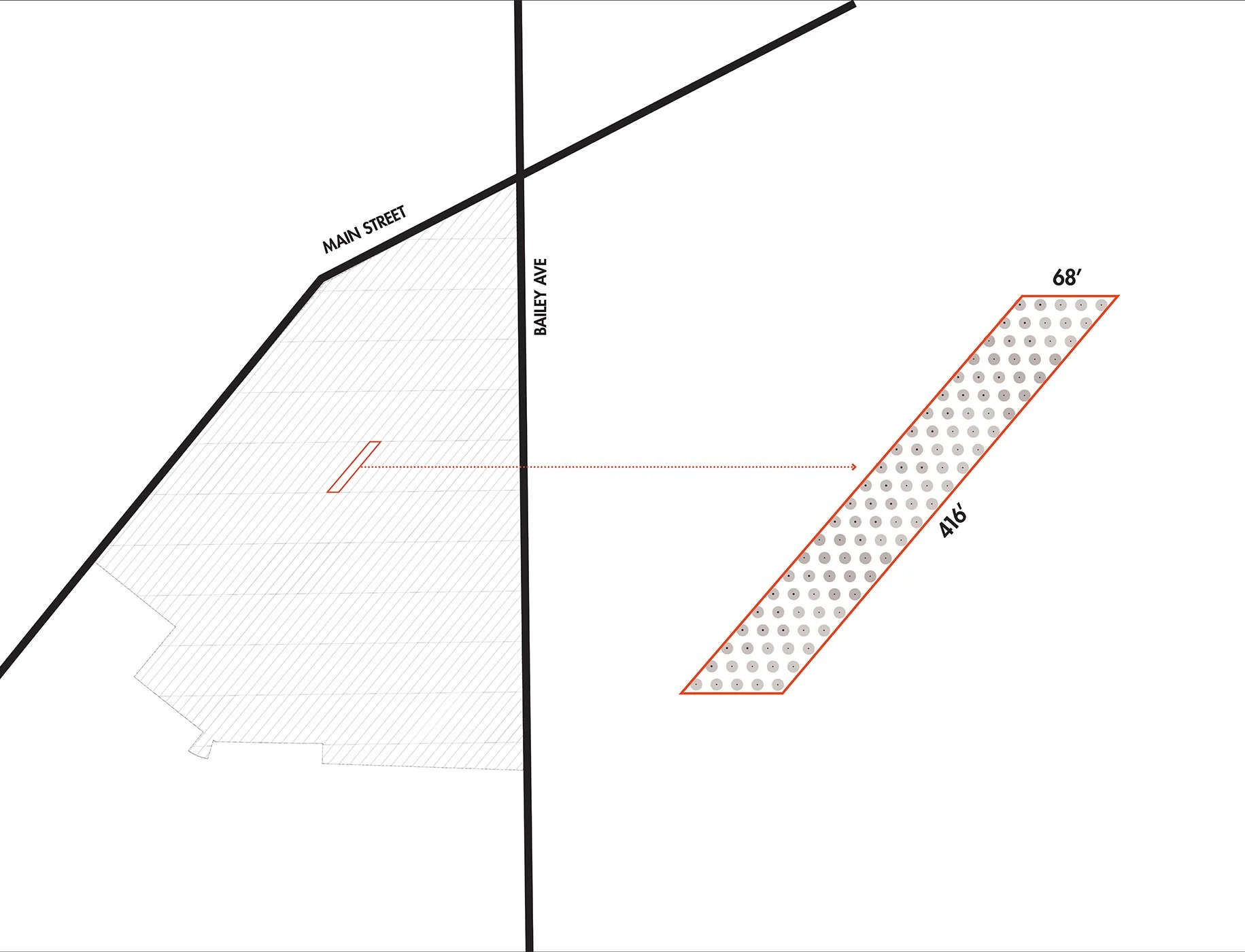
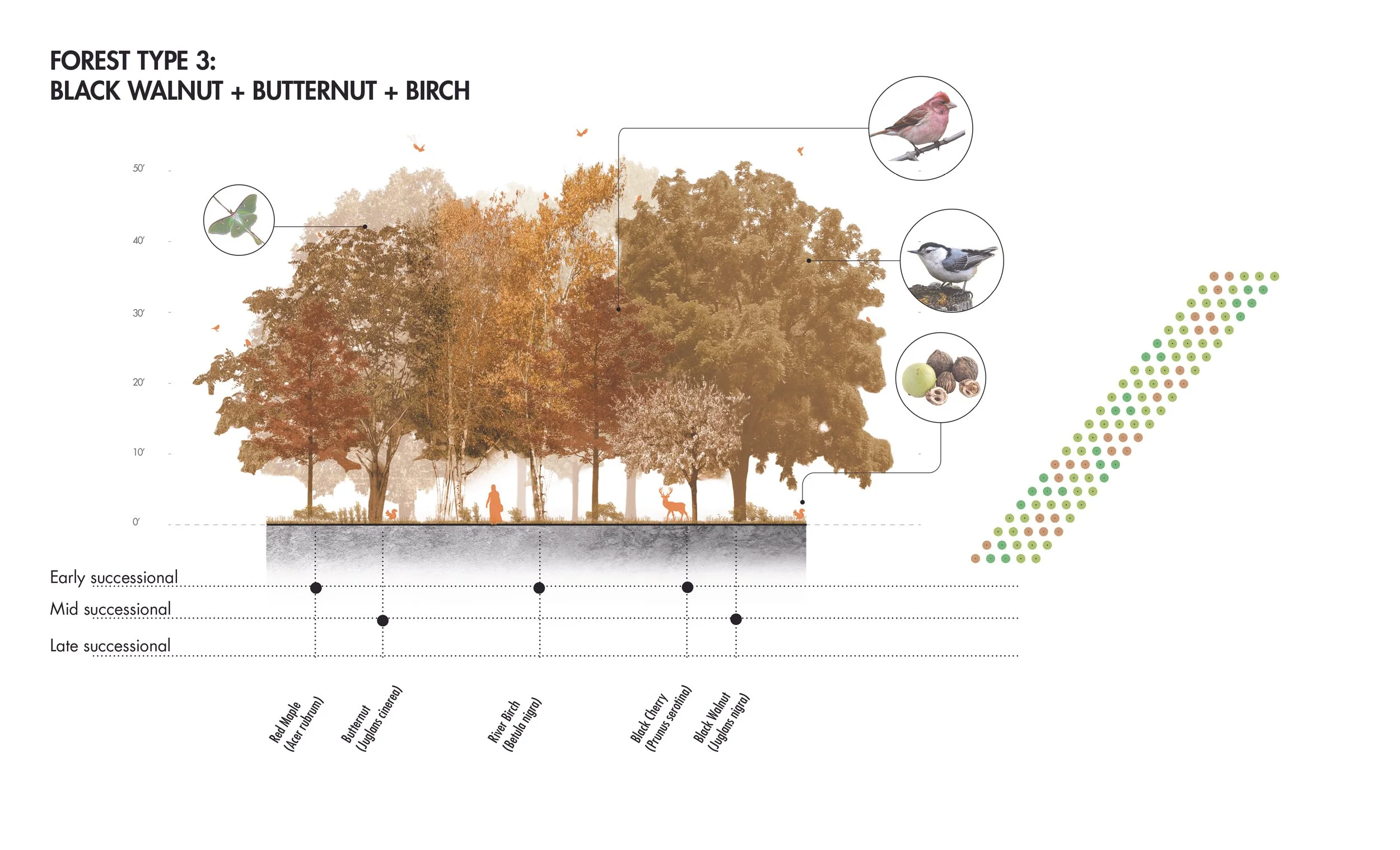
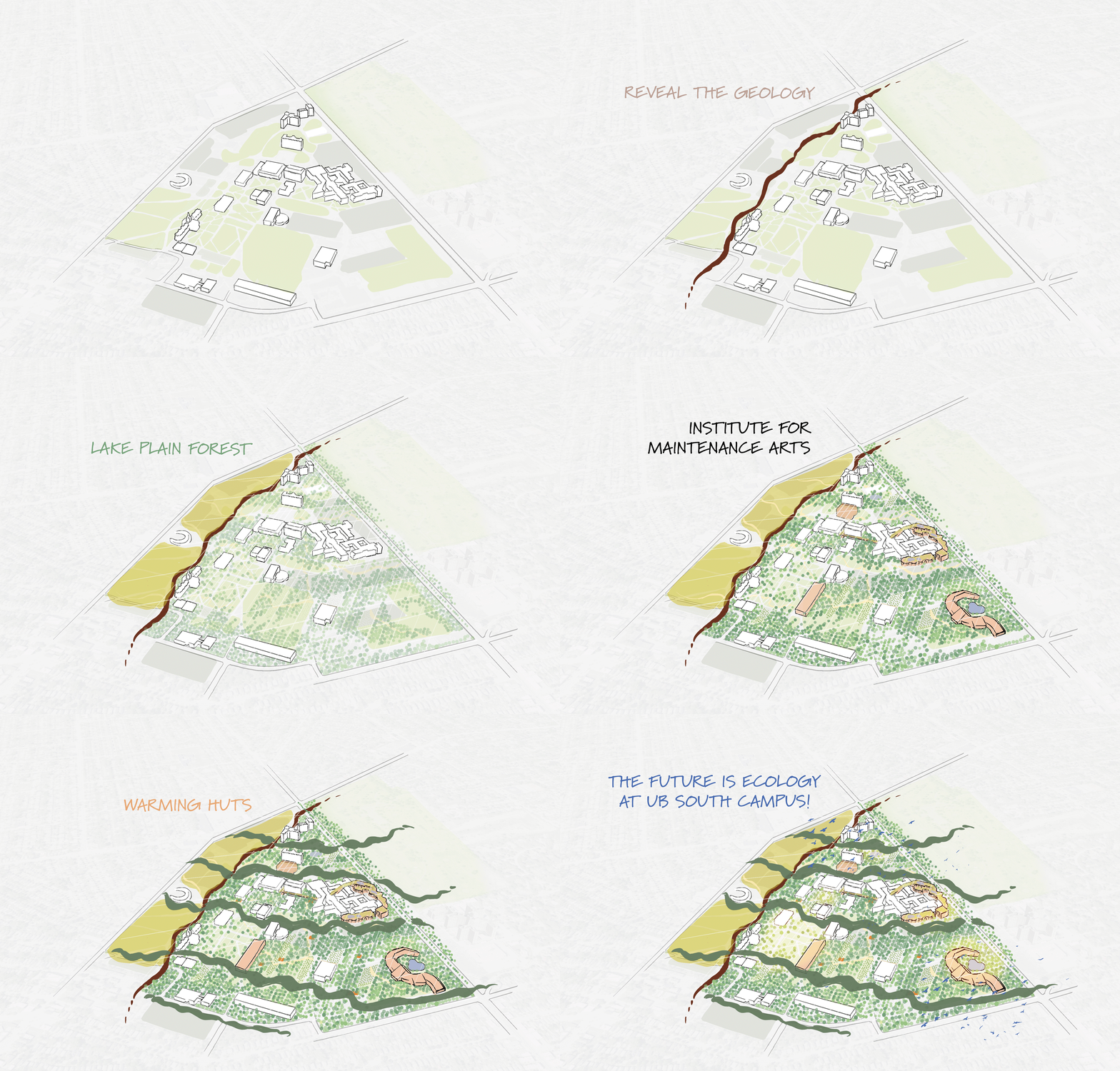
This proposal begins with a clear and consequential act: to forest the South Campus.
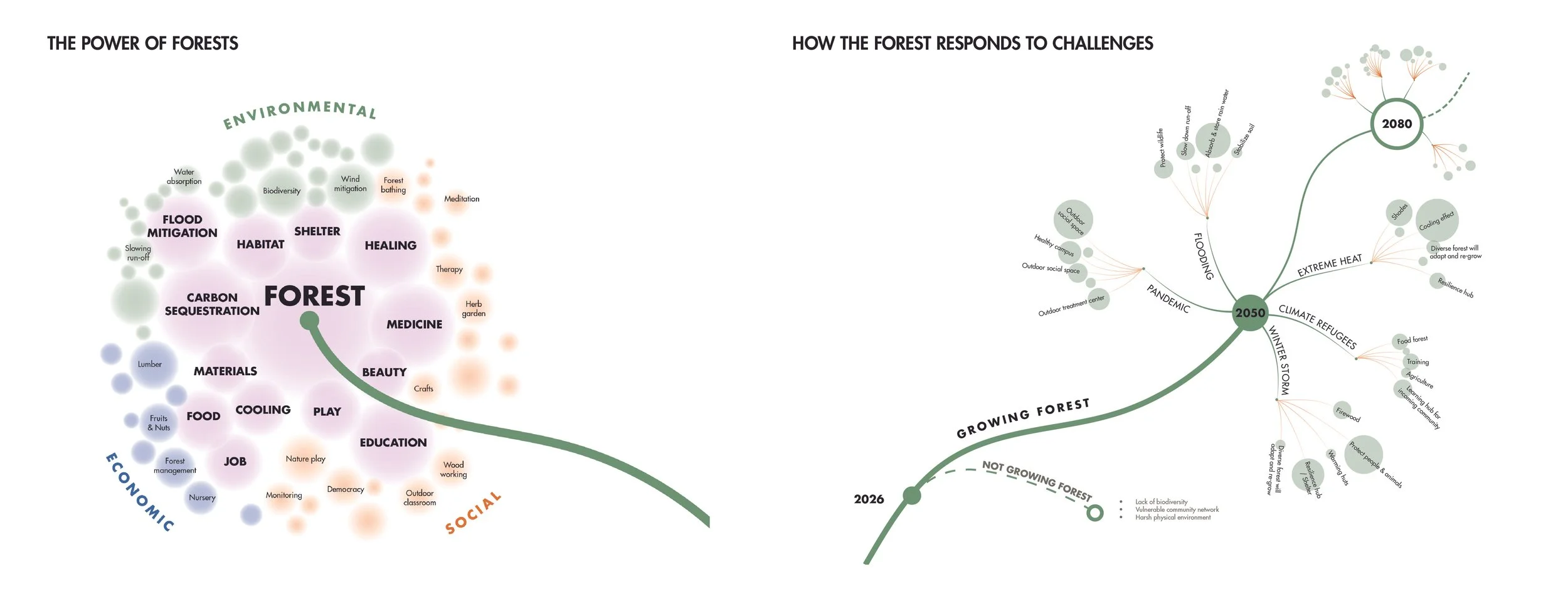
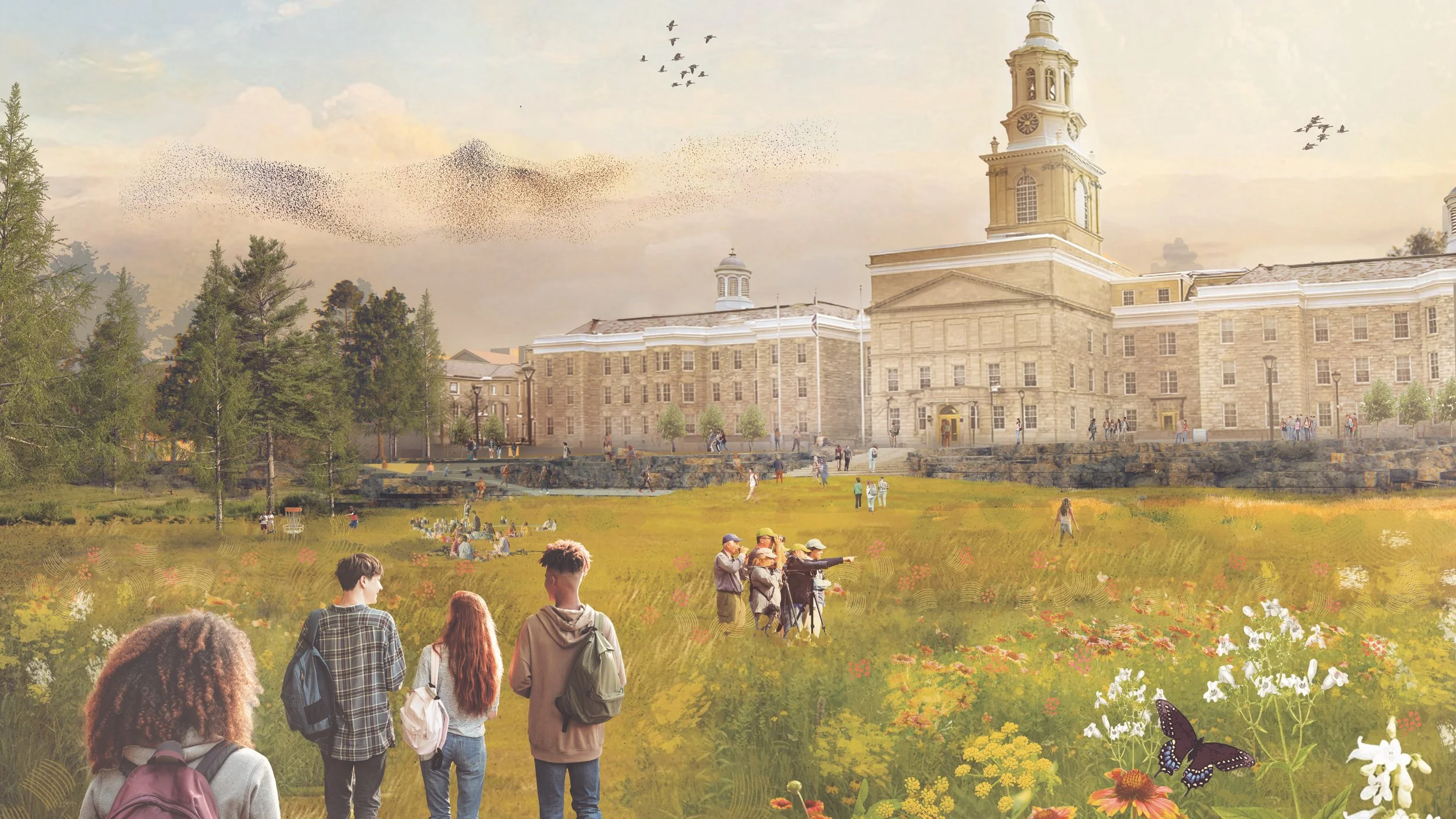
Forestation is not an amenity or aesthetic gesture. It is the primary infrastructure that allows imagination to thrive. Imagination requires safety without surveillance, agency without isolation, and play without fear of failure. Forests uniquely provide these conditions. Within a forest, attention arises, curiosity expands, and learning becomes embodied rather than abstract, creating the environmental foundation for formation, the capacity higher education now struggles to cultivate.
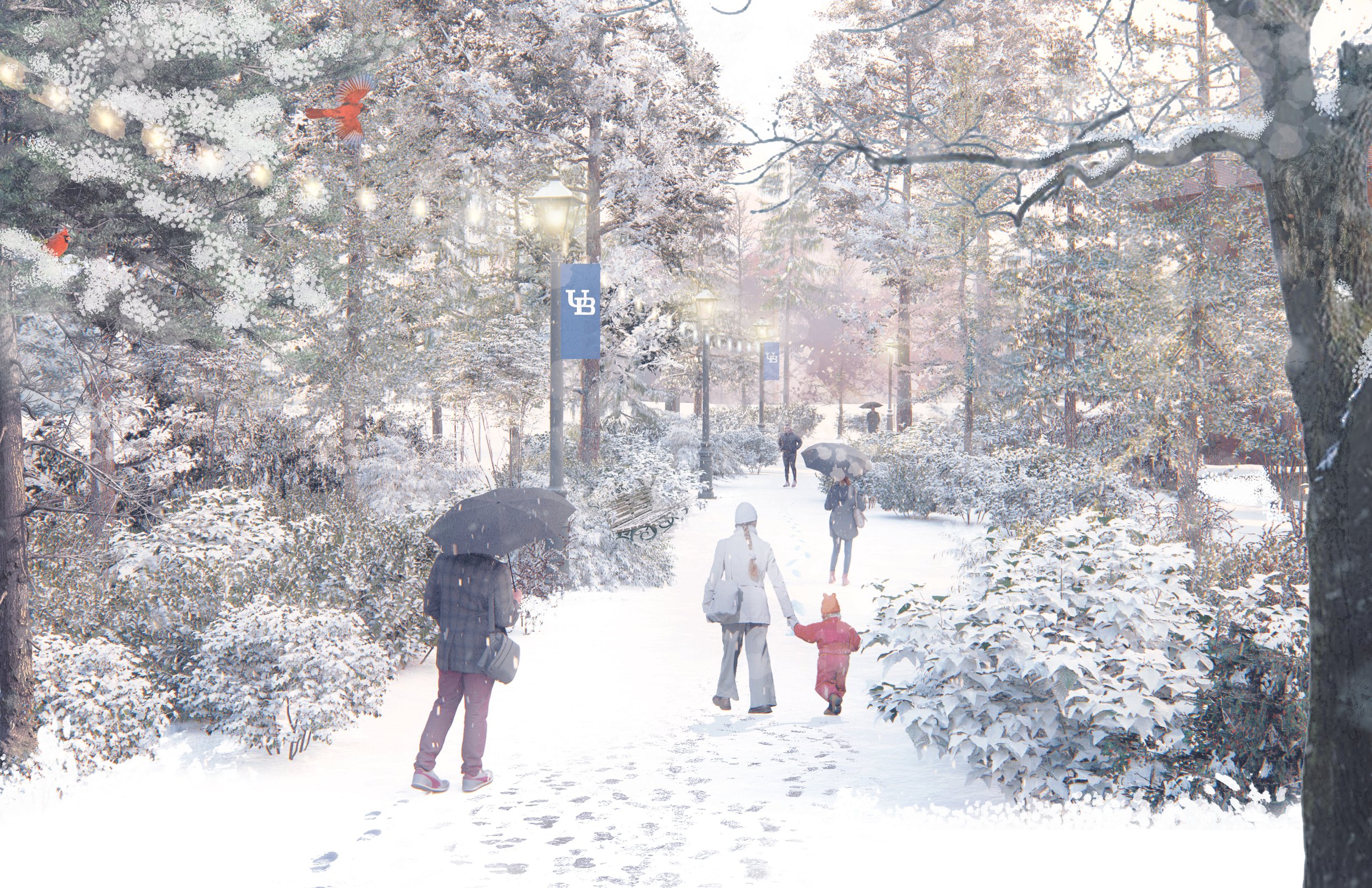
By restoring continuous, biodiverse forest systems, the campus becomes a living organization: one that breathes, witnesses, remembers, and teaches. Trees are no longer background elements, but relatives and ancestors; the forest becomes a citizen of the campus, shaping how people gather, learn, take risks, and care for one another.